Facebook Ads Campaign Structure: Best Practices for Testing and Scaling

Back then, advertisers used to juggle everything manually in Ads Manager. Running hundreds of campaigns, testing with different audiences, jumping from one ad set to another.
In 2026, the game has changed. Your Facebook campaign structure is at the center of how the platform allocates its budget, how quickly you receive data, and whether your test results are trustworthy.
The challenge is that there isn’t a single structure that works for every business. That depends on your goal, whether you’re testing creatives, scaling winners, or running retargeting.
The good news is that advertisers don’t start from scratch every time. There are reliable frameworks that serve as a starting point that you can shape around your business and your goals, not the other way around.
In this guide, we’ll break down the best practices for Facebook ad campaign structure in 2026, the three levels of Meta’s campaign hierarchy, and the CBO vs. ABO dilemma.
Key Takeaways
- Facebook’s campaign hierarchy is organized in three levels: campaign, ad set, and ad. Budget flows downward, and optimization happens at the ad set level.
- ABO works best for testing, while CBO works best for scaling proven winners. The hybrid approach is what most experienced media buyers default to.
- For creative testing, one creative per ad set (Structure A) is recommended; it gives you the cleanest, most comparable data.
- Horizontal scaling refers to duplicating winners across new audiences, placements, or budgets; vertical scaling means increasing the budget on existing winners by 20% increments, every 24–48 hours.
- Using consistent naming conventions is best practice. It keeps your account readable and makes it easy to find the campaigns you’re looking for.
- Automation is what turns a good framework into a model you can consistently follow. Offloading the structural work frees up the operational time that would otherwise be spent on building other important tasks.
Facebook’s Campaign Hierarchy - The Three Levels
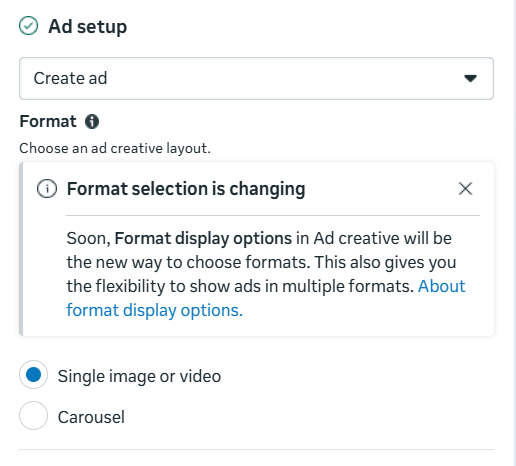
Before anything else, let’s get into the basics. Meta’s hierarchy is organized into three levels, and each level carries specific decisions that shape how your money is spent.
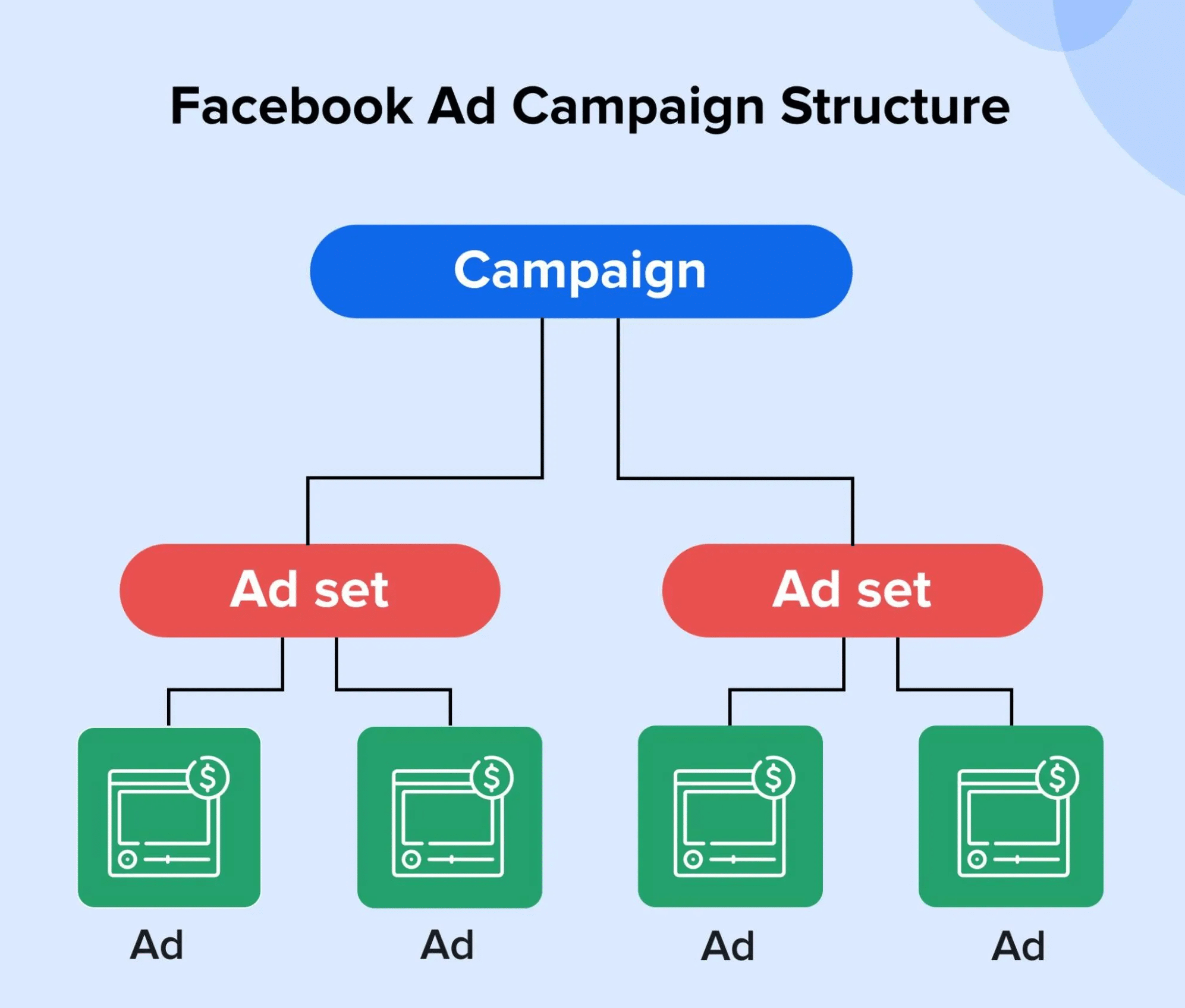
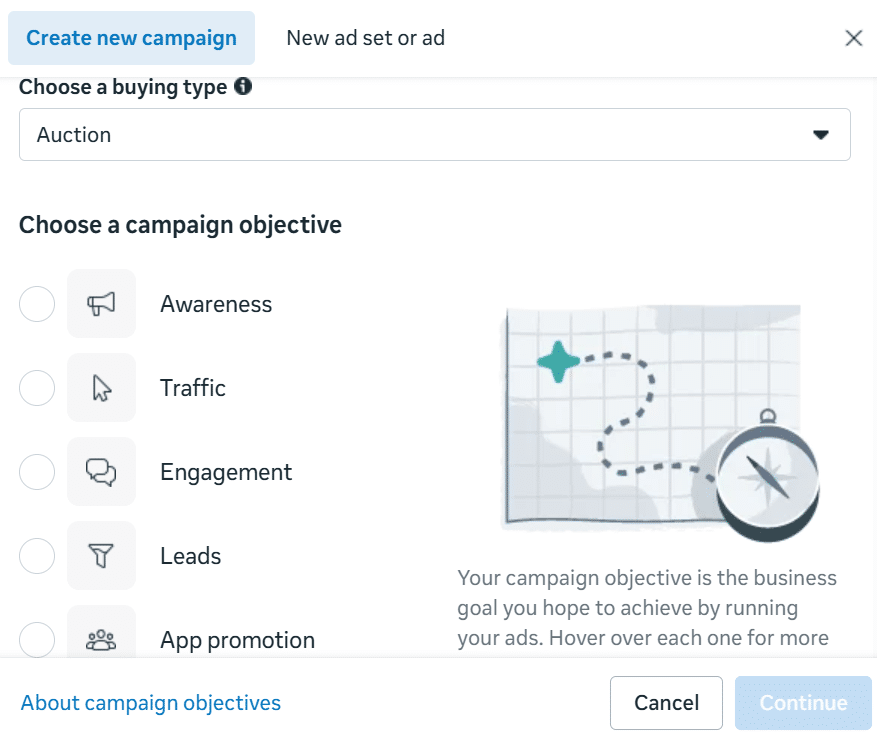
Campaign Level: This is where you set the objective (sales, leads, traffic, etc), the budget strategy, the bidding type, and any special ad categories. If you’re running CBO, this is where you set the campaign budget.
In the campaign level phase, Facebook understands what you’re trying to achieve, and everything below gets built around that goal.
Ad Set Level: Here you control audience targeting, placements, optimization events, bid strategy, schedule, and, if you’re running ABO, the budget. More importantly, this is where the algorithm learns. Pixel data, conversion events, and delivery patterns are all anchored at the ad set level.
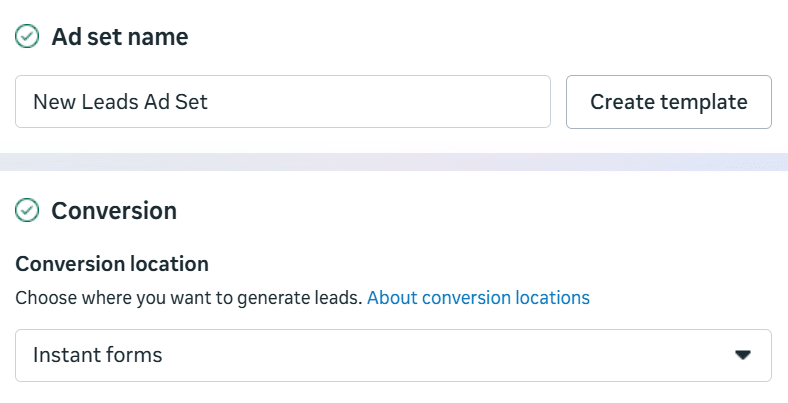
Ad Level: Your ad creatives live here. The image or video, primary text, headline, description, and all tracking parameters; you can see different variations of your ads and a preview of what they’d look like when published.
You can also measure what resonates with the target audience by connecting third-party reporting tools, like Google Analytics, to your Ads Manager account.
The decisions you make on every level when running campaigns are more consequential than advertisers realize. Every structure in this hierarchy is connected in a specific direction that matters.
Budget flows downward from campaign to ad set to ad, and optimization happens at the ad set level. So, if you change something at the top of the pyramid, it will pass through everything below it.
If your ad sets are poorly isolated, optimization signals overlap, and your data becomes unreliable. If your campaign budget is set at the top (CBO), Facebook decides how to distribute it, and that decision is made by the algorithm, not manually by you.
It’s a domino effect. A weak foundation at the campaign level creates problems that no creative testing methodology can fix. That’s why understanding this hierarchy makes the difference between a campaign structure that drives results and one that just burns budget.
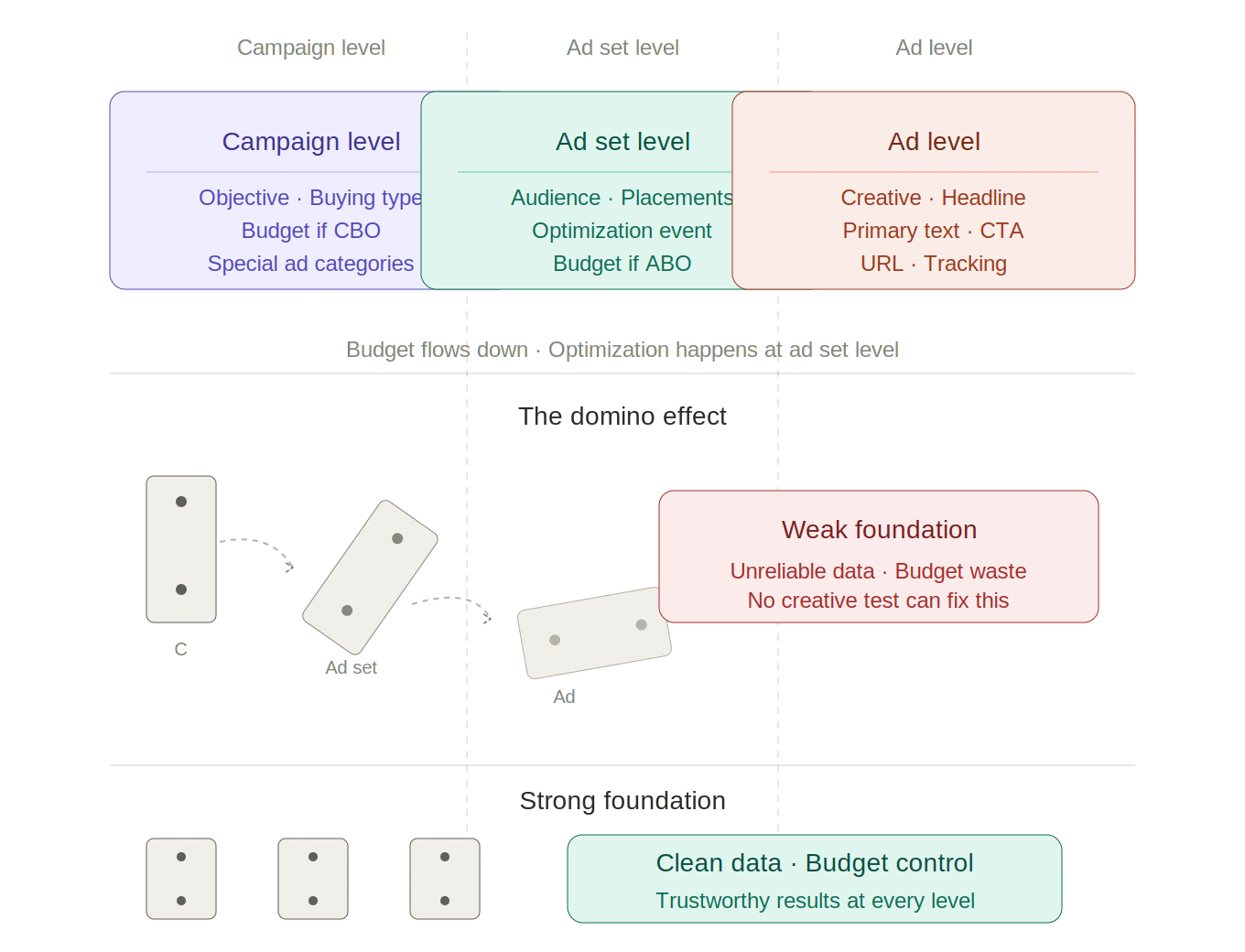
CBO vs. ABO: When to Use Each and How Campaign Budget Optimization Affects Your Structure
This is probably the most debated structural decision in Meta advertising, and for good reason.
Using the wrong budget strategy at the wrong stage has consequences: it either drains your budget or renders your test data untrustworthy. Let’s set the record straight:
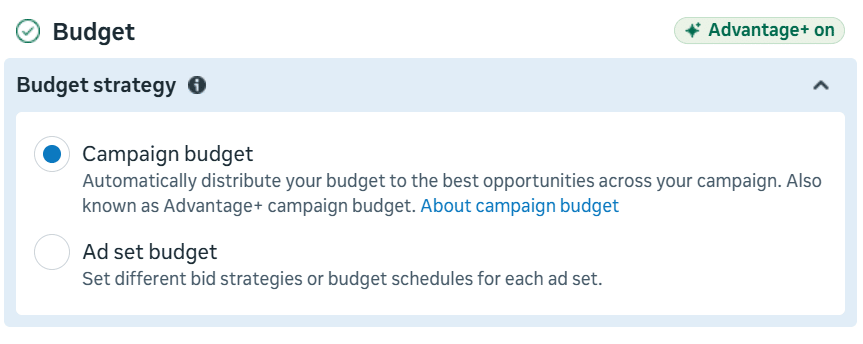
Campaign Budget Optimization (CBO)
Campaign Budget Optimization is a strategy in which you set a centralized campaign-level budget rather than individual ad set budgets. The algorithm then distributes it across ad sets based on the predicted performance.
Facebook’s model is fed by conversions and has enough data to make smart predictions, so CBO can find efficiencies you’d never find manually. That’s why this strategy works well for scaling winners with broad targeting and multiple placements.
The problem with CBO for testing is structural. Facebook will often funnel the majority of your budget to one or two ad sets before your variations have gathered enough data to be judged fairly.
As a result, the winners are chosen based on early, noisy signals. Meta’s model will favor ad sets based on initial traffic rather than their long-term potential.
Ad Set Budget Optimization (ABO)
Ad Set Budget Optimization assigns a fixed budget to each ad set. You have the control here; you decide how much each test gets, and Facebook can’t redistribute it. So, every creative or audience in your test gets a fixed spend, despite how other ad sets are performing.
When you’re trying to figure out which creative performs better, you need an apples-to-apples comparison; same audience, same budget, same time window. ABO gives you that. It is the right tool for testing.
But there’s a trade-off. As you scale and your test volume grows, manually monitoring individual ABO ad sets becomes overwhelming.
That’s why media buyers now separate testing from campaign scaling to ensure that both ABO and CBO serve their best intentions. ABO for testing, and CBO for scaling.
Run your creative tests in ABO campaigns with isolated ad sets. When a creative proves itself, based on your own conversion data, graduate it to a CBO scaling campaign.
Facebook Campaign Structures for Creative Testing
The whole point of a creative test is to find out what really works for your audience, not what Facebook’s algorithm decides to spend your budget on first. Everything about your structure should focus on that goal.
Let’s have a look at the three Facebook structures for creative testing:
Structure A: One Creative Per Ad Set
This is the recommended default for most accounts doing serious creative testing. The setup is:
- Single ABO campaign
- One ad set per creative
- Identical audience and targeting across all ad sets
- Equal daily budget for each
Every creative must compete on the same terms. When creative A, for example, has a 2x better CPA than creative B, and both have the same spend against the same audience, you’ve learned something that’s real.
But when creative A just got more spending because Facebook’s algorithm liked it on day one, that’s biased, and you’re not learning anything that could make a difference.
How to make this structure work in practice:
- Run each batch for seven days before making a judgment. This is where you prevent costly mistakes that many advertisers make. If you launch a new batch, say Tuesday, and pull results on Friday, you’re not making a proper comparison. For most businesses, weekend performance is different from weekday performance. So, if you shut down a batch after three days, you might be killing results that would otherwise appear on Sunday, for example.
- Keep each batch to 4–6 creatives at lower spend levels. I know it’s tempting to test more angles, formats, and hooks. But think about it this way. If you spend $20–$50/day per ad set, spreading the budget across 10–15 creatives means most of them will collect almost zero impressions. 4–6 is the sweet spot.
- Use ad set spending limits inside a CBO if you go that route. If you’re running this as a CBO, you’ll often run into a common pattern. Older ad sets with existing data absorb most of the budget while your new test batches starve. To prevent that from happening, set an ad set spending limit of 80–90% of the daily campaign budget per ad set.
Structure B: One Creative Per Campaign
This is the highest isolation testing structure. Each creative gets its own campaign with its own budget.
Run one creative per campaign in one of these scenarios:
- When you’re spending enough, that even ad-set-level shared settings feel like too much interference.
- When you need completely separate learning phases for each creative.
- When you want to set different automation rules for different creatives.
Structure B setup:
- One campaign per creative
- One ad set per campaign
- Identical broad/interest targeting across campaigns
- Dedicated daily budget for each campaign
Structure C: Batched Testing (3–5 Creatives Per Ad Set)
Sometimes budgets don’t support full isolation. Grouping a small number of creatives within a single ad set gives you directional data without requiring a full one-per-ad set budget.
Structure C setup:
- One ABO campaign
- 3–5 creatives inside each ad set
- Shared audience and targeting across all ad sets
The problem here is that Facebook will bias delivery toward one creative per ad set. The “winner” in a batched test is partly a winner, and partly just the one Facebook decided to spend on first.
Use this structure as a first-pass filter:
- To quickly kill obvious losers when you have many variations
- Keep batches tight, so that at least each one has a chance to spend
- Promote only the top performers into Structure A, for proper, isolated testing
Facebook Campaign Structures for Scaling
Finding a winner is only half the job; scaling without blowing up your CPA is the other. To get there, consider these two main strategies: horizontal and vertical scaling. (Or both.)
Horizontal Scaling
Through horizontal scaling, you expand your advertising reach by duplicating winning ad sets into new campaigns that target different audiences, placements, or regions.
Each duplicate starts its own learning phase independently, and you get to avoid the instability that comes from expanding a single campaign.
The smart way to do this at scale is to use multiple groups to generate permutations automatically. Take your winning creative, cross it with three audience segments and two budget levels, and generate all six combinations.
Main methods include:
- Experiment with different creatives
- Target new audiences
- Explore new placements
Another thing to consider is naming conventions. If every campaign is named “Campaign 1,” you’ll have no idea which variable combination you’re looking at when results come in.
The best practice is naming the template this way: [Audience]_[Creative-ID]_[Budget]_[Date]
Vertical Scaling
Vertical scaling is the strategy of increasing the budget and occasionally bidding on existing successful ad campaigns or ad sets. In other words, you’re scaling what you know is working by adding more budget, audiences, and creative tests.
Main methods include:
- Increasing budget
- Duplicating ad sets
- Make the most out of CBO campaigns
The standard rule is 20% increases every 24–48 hours.
To make this even simpler, you can automate the increments by setting rules. Set a rule that triggers a 20% budget increase if CPA stays below your target for three consecutive days.
Jumps larger than 30% are where the risk starts. This is where you start to see CPAs spike at mid-scale, and in this scenario, the algorithm needs time to recalibrate to new spending levels.
Multi-Account Scaling
When you’ve truly exhausted horizontal scaling within one account, it’s time to replicate your winning structure across multiple ad accounts. Each account enters its own learning phase and competes in auctions independently.
You’re essentially running parallel experiments on the same creative, which gives you more spend capacity without cannibalizing a single account’s delivery.
In this case, the best practice is to build the structure once and publish it to all accounts simultaneously.
Naming Conventions That Scale With You
When you scale to 50 or 150 campaigns, poor naming conventions become a serious operational issue. Because you can’t analyze what you can’t identify.
To prevent that from happening, use this naming template:
[Objective]_[Audience]_[Creative-ID]_[Date]_[Budget]
The ideal implementation is dynamic naming, tokens that auto-populate based on actual campaign settings. Define the patterns once, and every campaign built from that template automatically follows the convention.
{campaign_objective}, {audience_name}, {creative_name}, {daily_budget}, {date}
Automating Your Facebook Campaign Structure
Even if your Facebook campaign structure is right, there comes a moment when it’s impossible to execute it consistently. It shows up around the time you’re trying to launch more than 10–15 campaigns per week manually.
In practice, that gap looks like this:
- Uploading 30 creatives into isolated ad tests takes one to two hours in Ads Manager, minimum, and that’s assuming no mistakes. With auto-explode, the same job takes under five minutes.
- Generating audience × creative × budget permutations means building each combination one by one. With variation groups, you define the variables and generate all combinations in one step.
- Launching across multiple accounts requires rebuilding the same structure in each account. Multi-account publishing helps you build once and push everywhere.
- Attaching automation rules after launch creates a gap. If you attach rules at the point of creation, they’re active from the first impression.
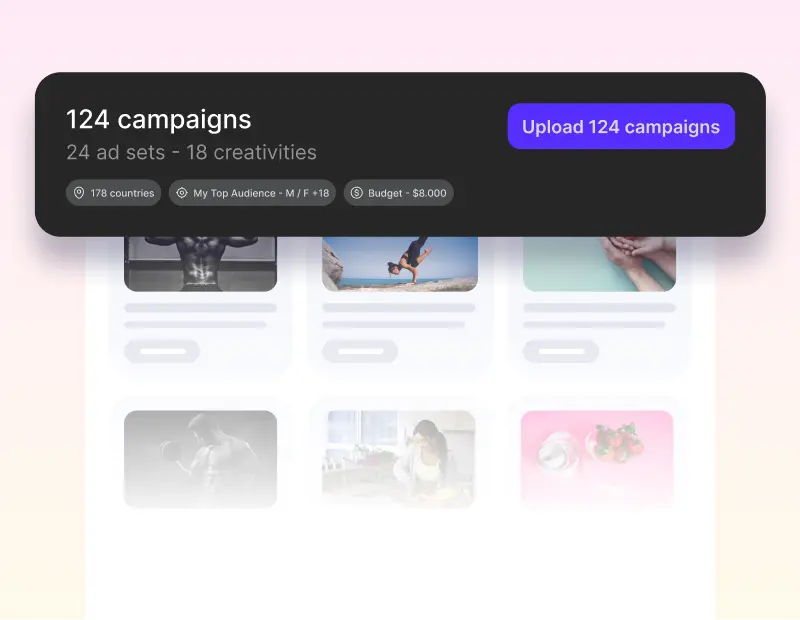
TheOptimizer’s Campaign Creator handles all these steps in one single, centralized workflow.
You can launch hundreds of campaign variations, clone them in just a few clicks, and reuse similar templates, all while keeping a solid campaign structure.
Common Facebook Ad Structural Mistakes That Cost Advertisers Money
Now we’ll go through some of the recurring patterns to keep an eye on, especially in accounts that are growing fast and building processes on the fly.
- Using CBO for creative testing. Facebook picks the winner before you have enough data to fairly judge your creatives. As a result, you might think you know which creative works, when in reality you don’t, because the winner has been chosen by the platform’s early preferences.
- Running too many creatives in a single set. Facebook picks one, maybe two, and funnels the majority of spend there, while the rest gets near-zero impressions.
- No naming convention. If you’re running only a few campaigns, this doesn’t really matter, but at scale, you can’t analyze what you can’t identify. You won’t be able to find anything if the campaign name gives you nothing to filter by.
- No budget isolation. When creatives share ad sets or run inside a CBO campaign without spend floors, the performance differences you see reflect Facebook’s distribution logic more than actual creative quality.
- Building everything manually. The structural work is repeatable and time-consuming, which means errors accumulate and launch velocity slows.
- Not attaching automation rules at launch. The first hours of a campaign are when spend is most unpredictable and CPAs most volatile. This is the wrong time to have no barriers in place. Campaigns that launch with stop-loss rules attached are protected from impression one, which is the protection window that matters.
→ See how we launched 89 campaigns and 630 ads on Meta in under 60 minutes.
Build the Right Facebook Campaign Structure, Then Scale it
There isn’t a single Facebook campaign structure that magically helps you scale overnight. The right campaign structure depends on your goals, and achieving them is fueled by the strategies you use.
The logic is simple. Testing creatives requires isolation, while scaling them requires smart duplication and automation. Start with ABO, one-per-ad-set. When you detect winners, that’s when you graduate it to a CBO scaling campaign and let the algorithm do what it thrives in.
Scale horizontally before vertically, and make sure your automation rules are live before your campaigns are.
The mistake that costs advertisers thousands of dollars is underestimating how fast manual execution breaks down as volume grows. Your creative strategies can be unmatched, yet you might end up cutting corners because manually building 30 isolated ad sets in one day isn’t realistic.
As your Facebook campaign volume grows, the build process has to keep up. Automating all the steps before anything goes live turns a good framework into a template you can execute every single time, within a few minutes.
FAQs
What is the Facebook campaign structure?
Facebook campaign structure is a three-level hierarchy that organizes your advertising based on: the objective and budget strategy you set (campaign level); the audience, placements, and optimization event (ad set level); and the space where your creatives live (ad level).
When should I use CBO vs. ABO?
Use ABO when you’re testing; you spend equally across creatives and audiences, so your comparisons are clean. And CBO, when you’re scaling proven winners, the algorithm has enough data to distribute the budget efficiently. The structure most experienced media buyers use is both ABO for testing and CBO for scaling.
How much should I increase my Facebook ad budget when scaling?
The standard guidance is 20% increments every 24–48 hours. Increases of more than 30% could push your campaign back into the learning phase, resulting in unstable delivery and spiking CPAs. Best practice is to automate these increments using rules tied to CPA performance.
What is the Advantage+ Campaign Budget on Facebook?
Advantage+ Campaign Budget is Meta’s rebrand of CBO (Campaign Budget Optimization), rolled out in 2023. The name changed, but the functionality remains the same.
How many ads should I have per ad set?
For creative testing, 4–6 ads per ad set is the sweet spot at most ad levels. At higher spend levels, you can push to more ads/batch, but quality should always come before quantity.